From £27,2957

Toyota's efficient petrol-electric entry to the compact crossover class goes under the knife for another update

Find Toyota Yaris Cross review: a 63mpg antidote to complexity deals
New car deals
From £27,295
Nearly-new car deals
From £23,300
Other Services
Sell your car
84% get more money with

Since its arrival in 2021, the Toyota Yaris Cross has quietly established itself as one of the default choices in the hybrid crossover class – and the Japanese firm’s best-seller across Europe. 

With the supermini agility, low running costs and enough practicality for those who need a compact urban runaround, the Yaris Cross is a regular sight on UK roads. But in such a competitive class, which includes the best-selling Ford Puma, there’s no time for complacency. 

It was only two years ago when Toyota introduced a number of mechanical and technological revisions, but now it has treated its high-riding supermini to yet another round of updates – although the tweaks are relatively modest.  

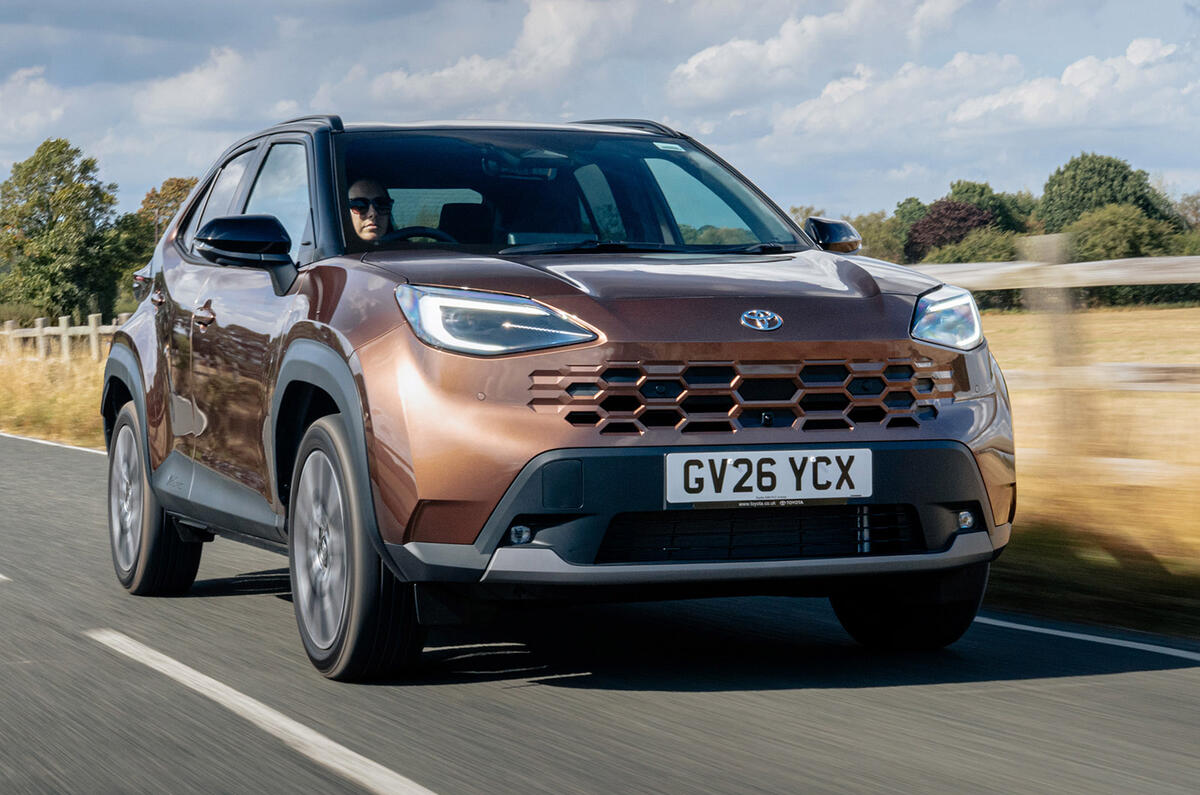
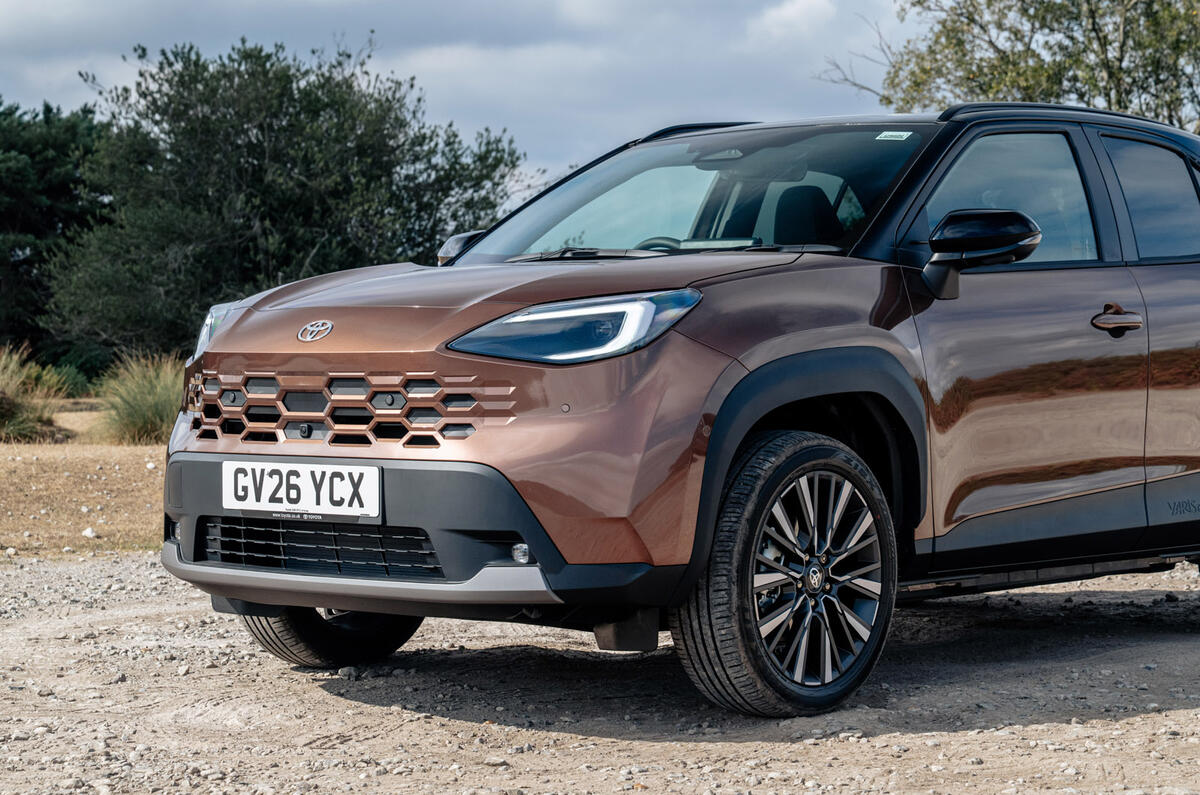
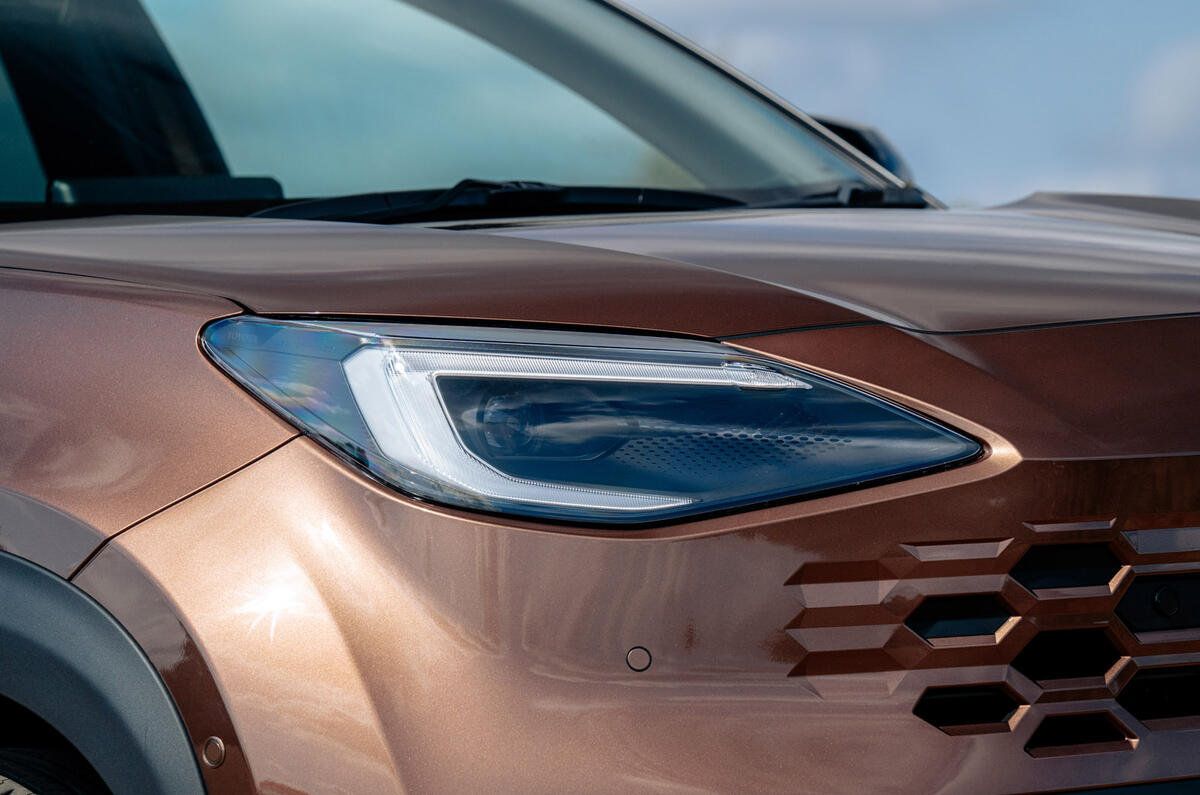
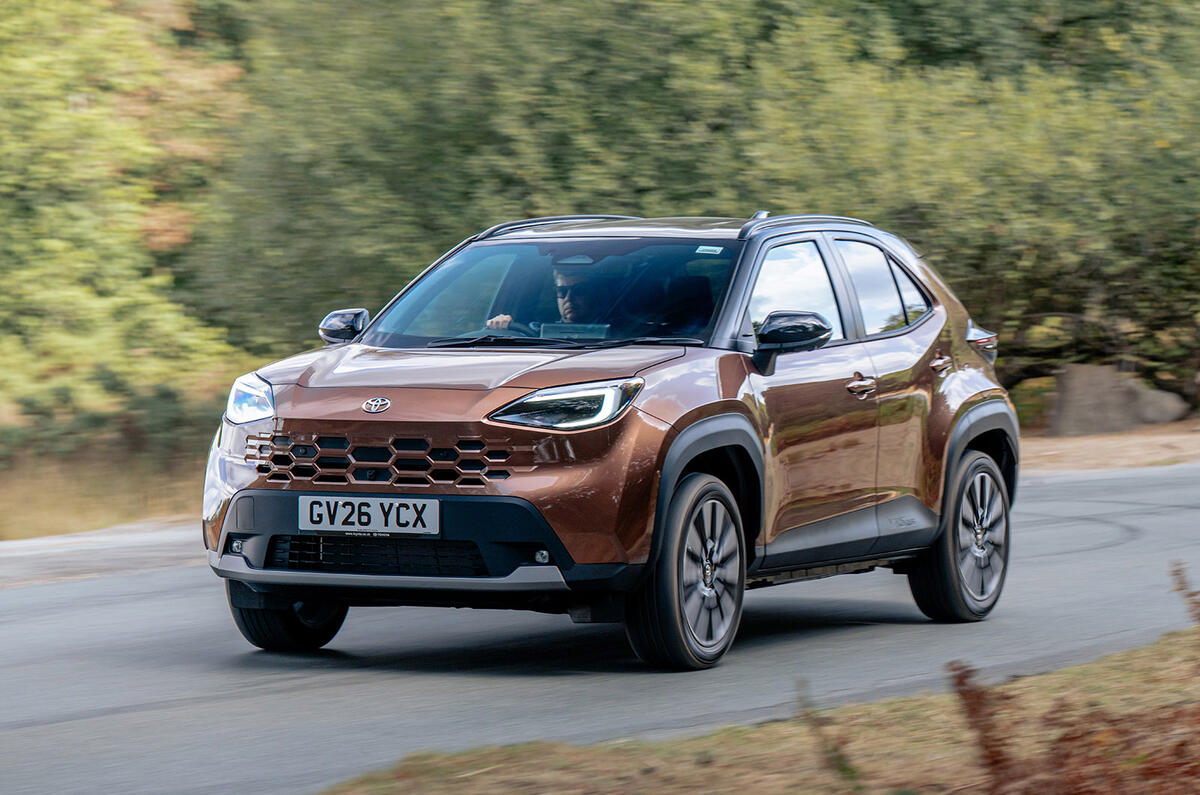
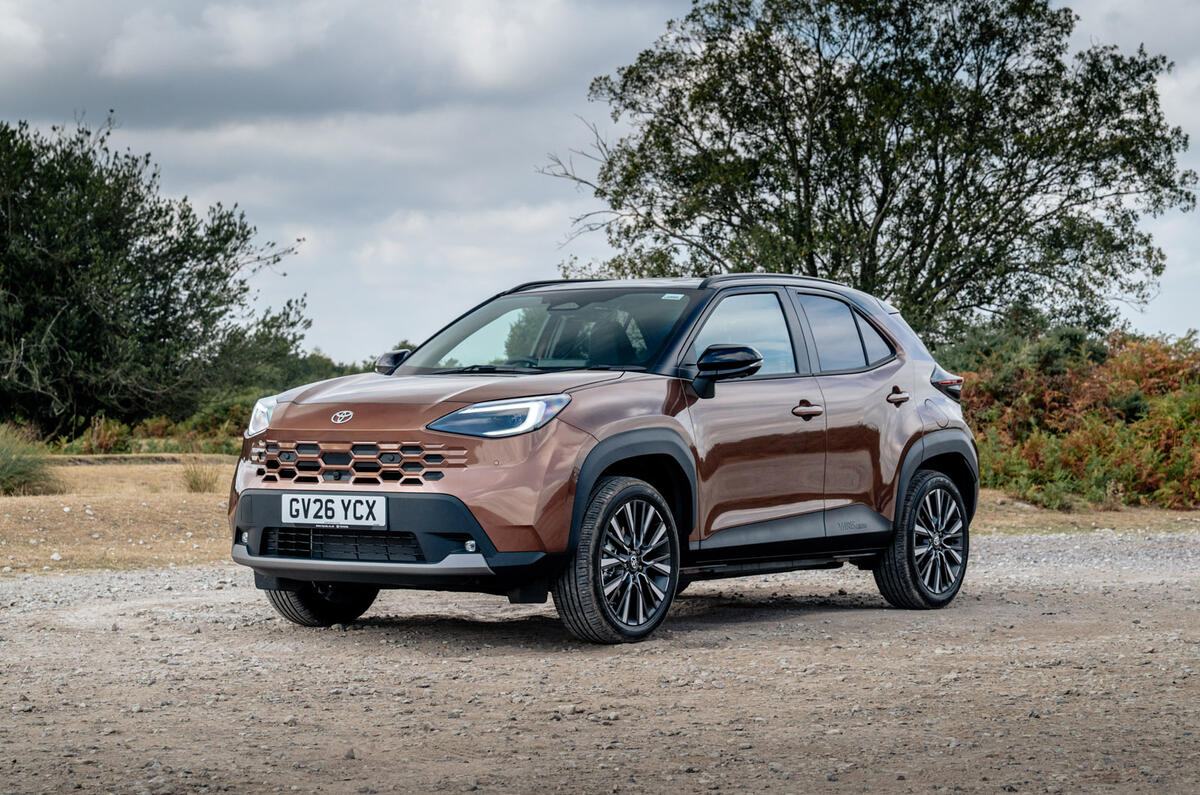
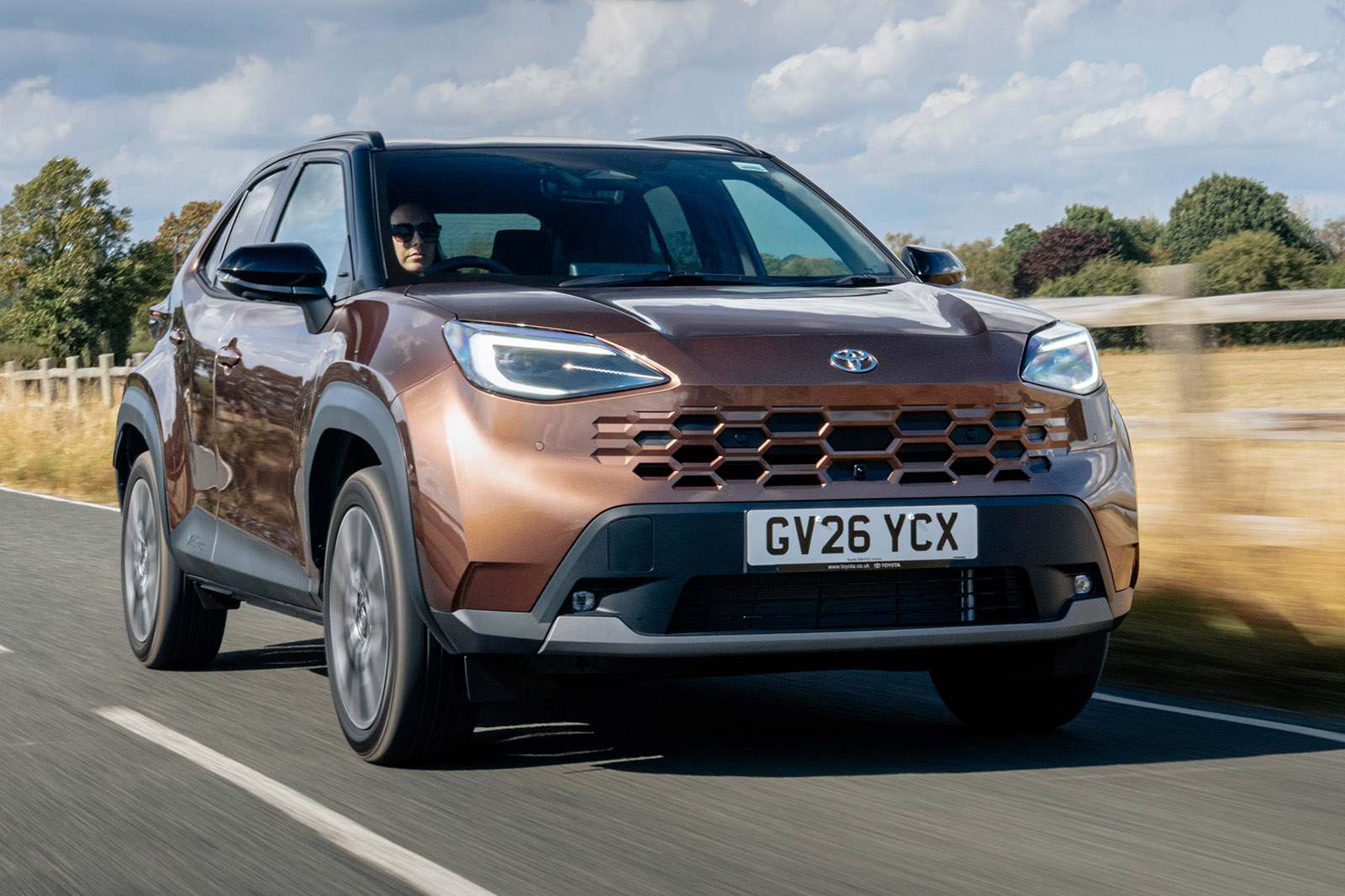
The headline changes come in the form of a honeycomb grille, sharper LED headlights, more standard kit. Gone is the entry-level 114bhp powertrain, with the peppier 129bhp Hybrid 130 now standard across the range. 

Advertisement

DESIGN & STYLING

7
Toyota Yaris Cross review 2026 002

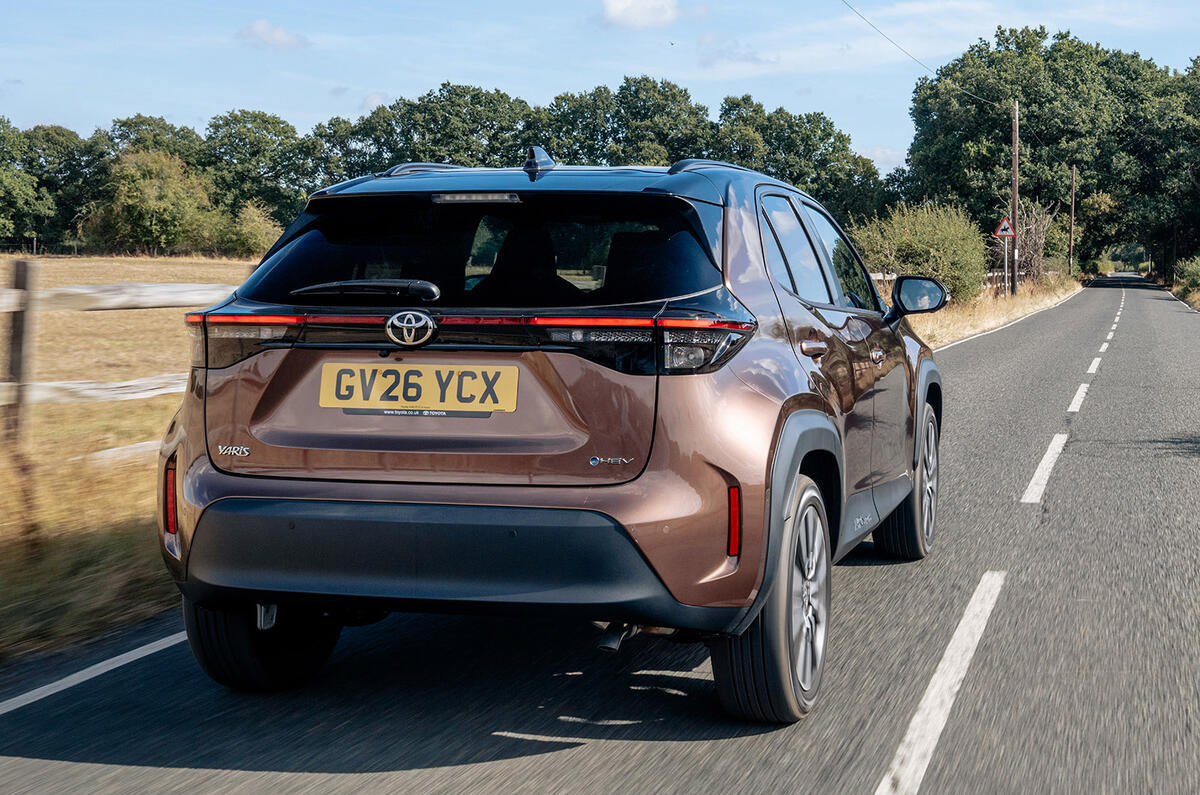
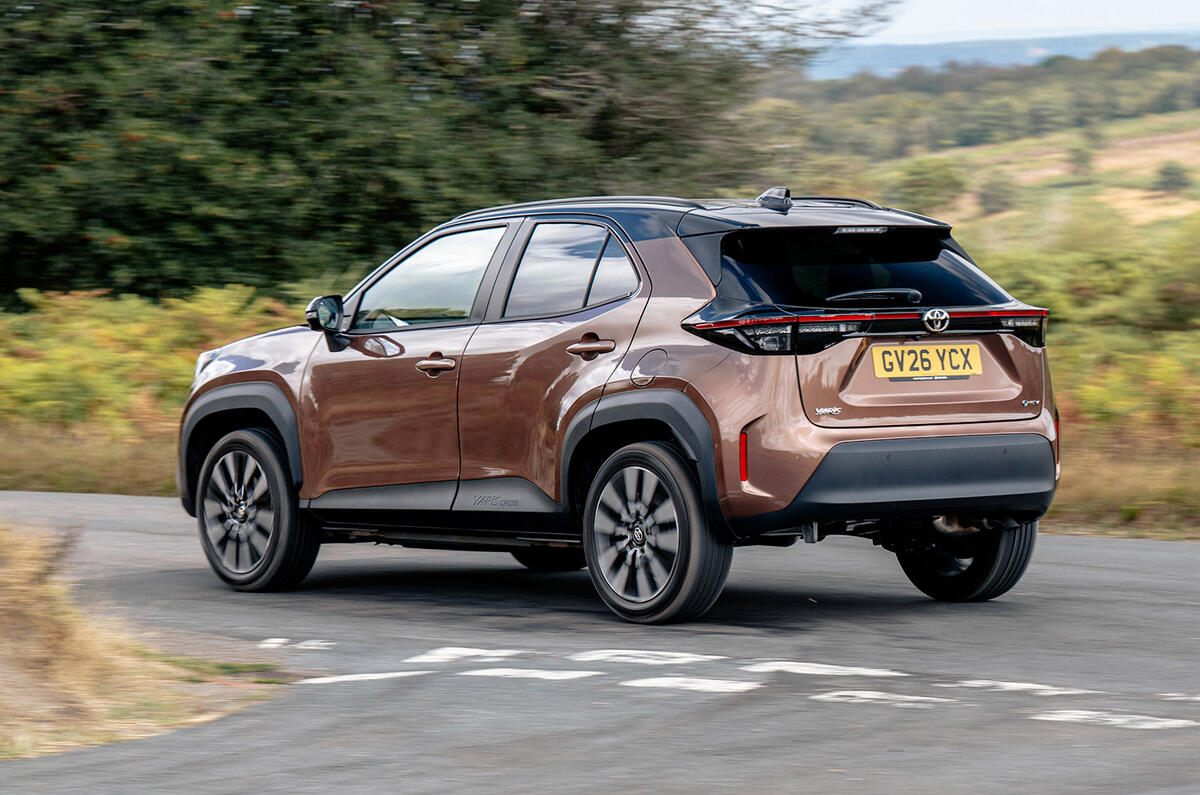
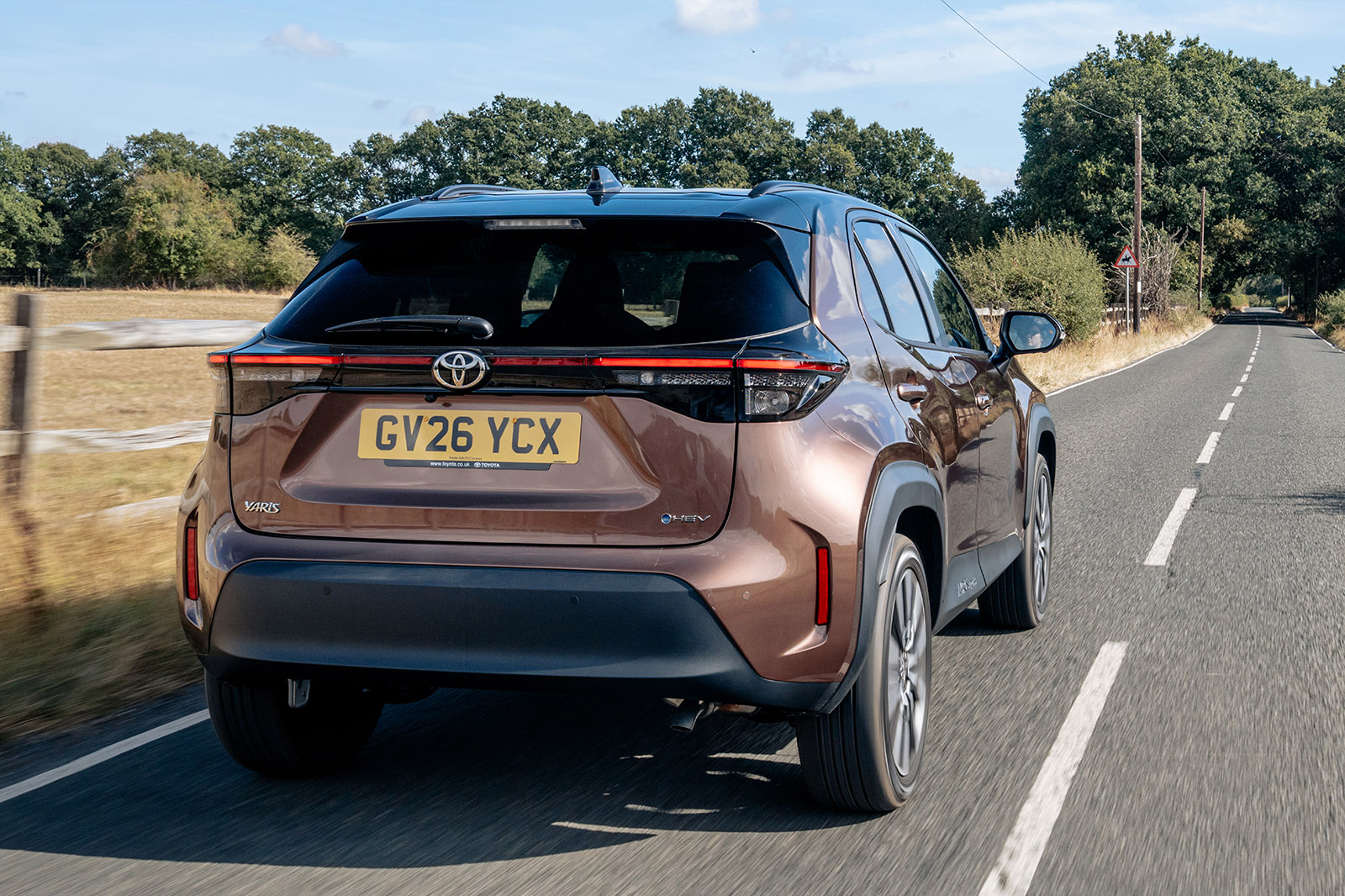
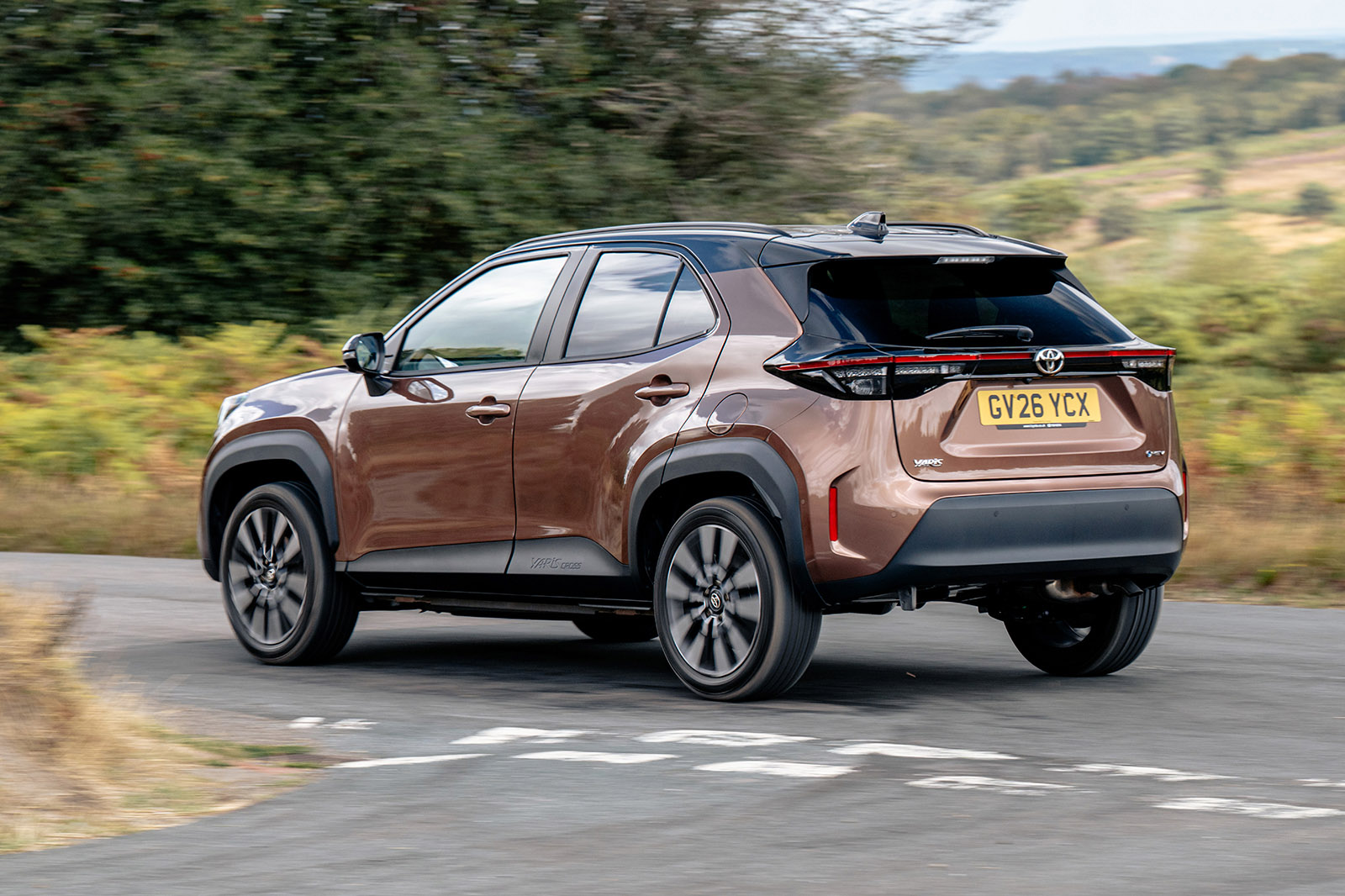
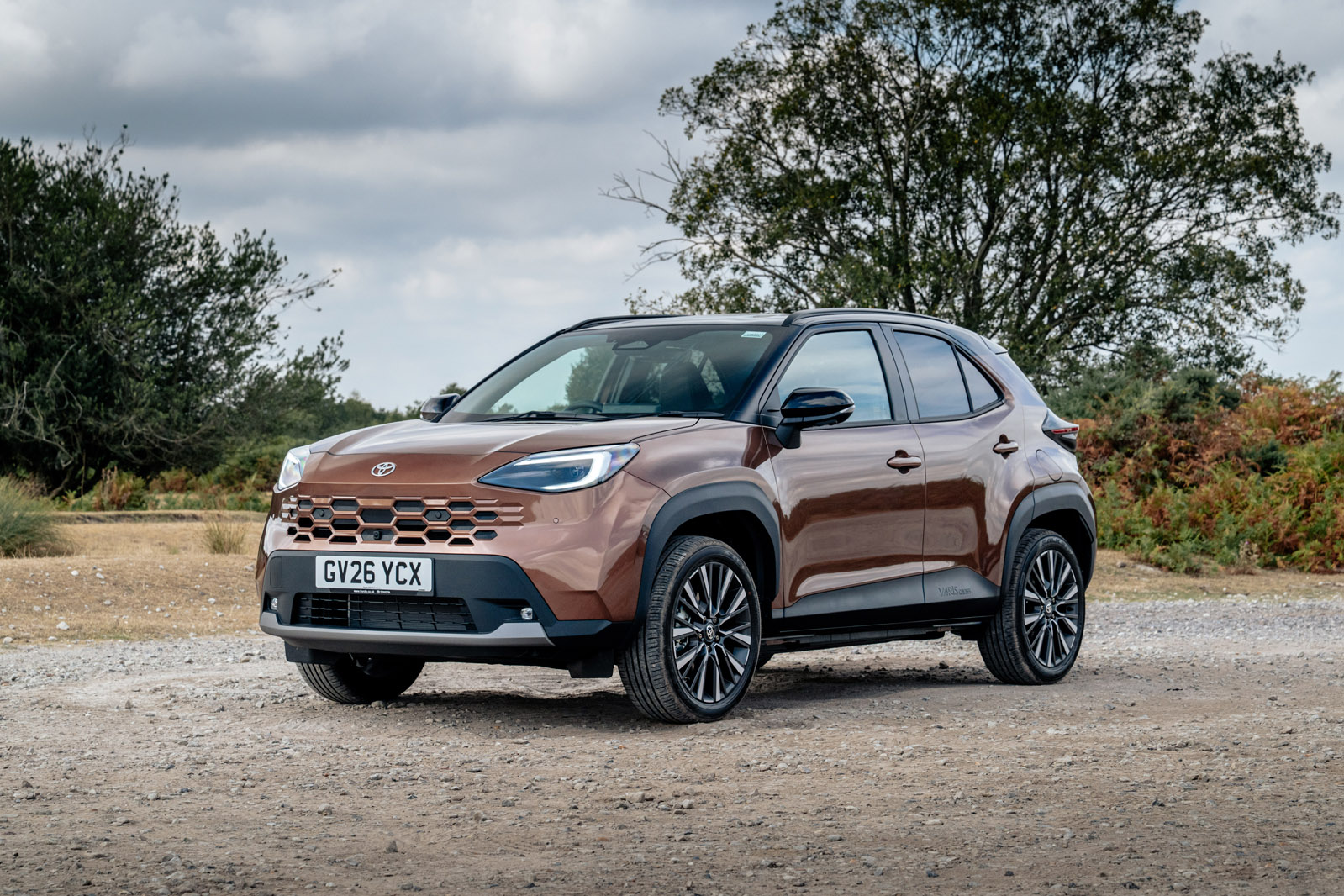
A light nip-and-tuck seems like a fair description for the visual changes that have been made to the Yaris Cross’s styling. 

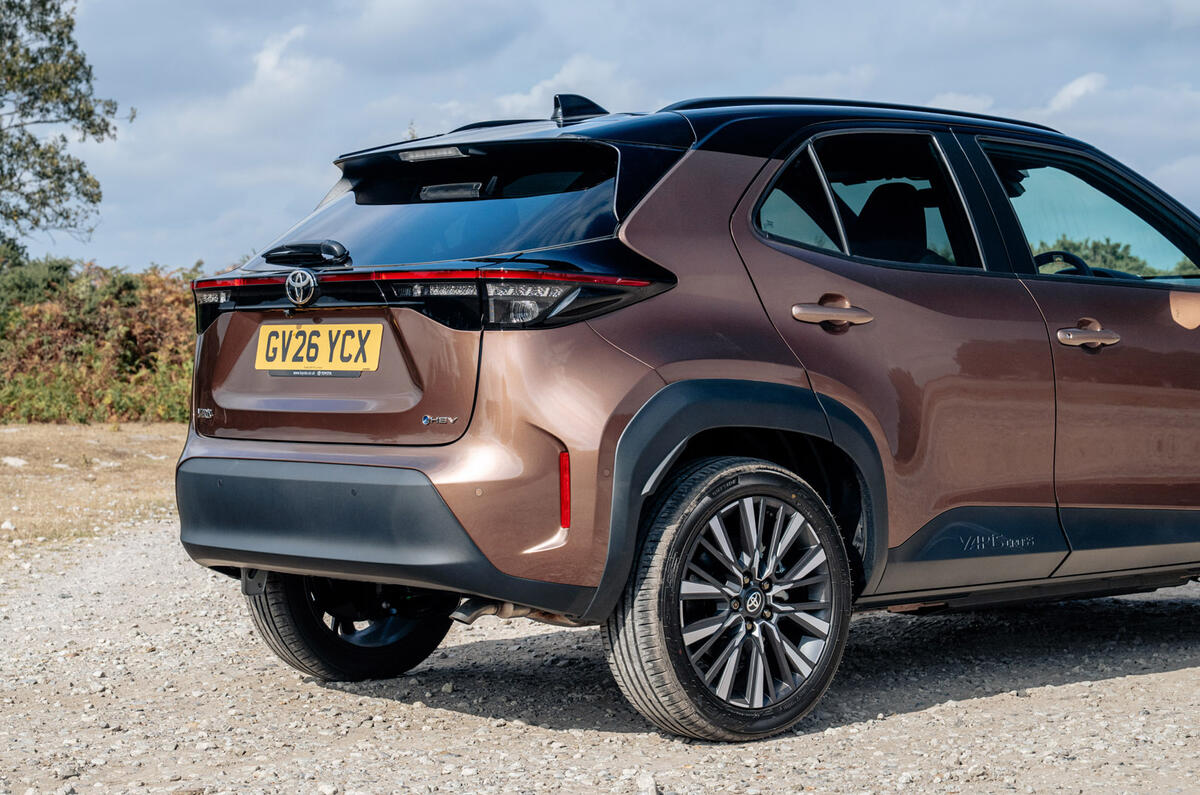
As mentioned, there’s a new body-coloured honeycomb grille that gives it a stronger resemblance to the recently launched Mk6 Toyota RAV4, revised LED daytime running lights and some slightly different roughty-toughty cladding on the doors – but that’s your lot. 

Previous versions of the Yaris Cross could have this powertrain with 114bhp, but that version has been dropped, so all variants now make 129bhp.

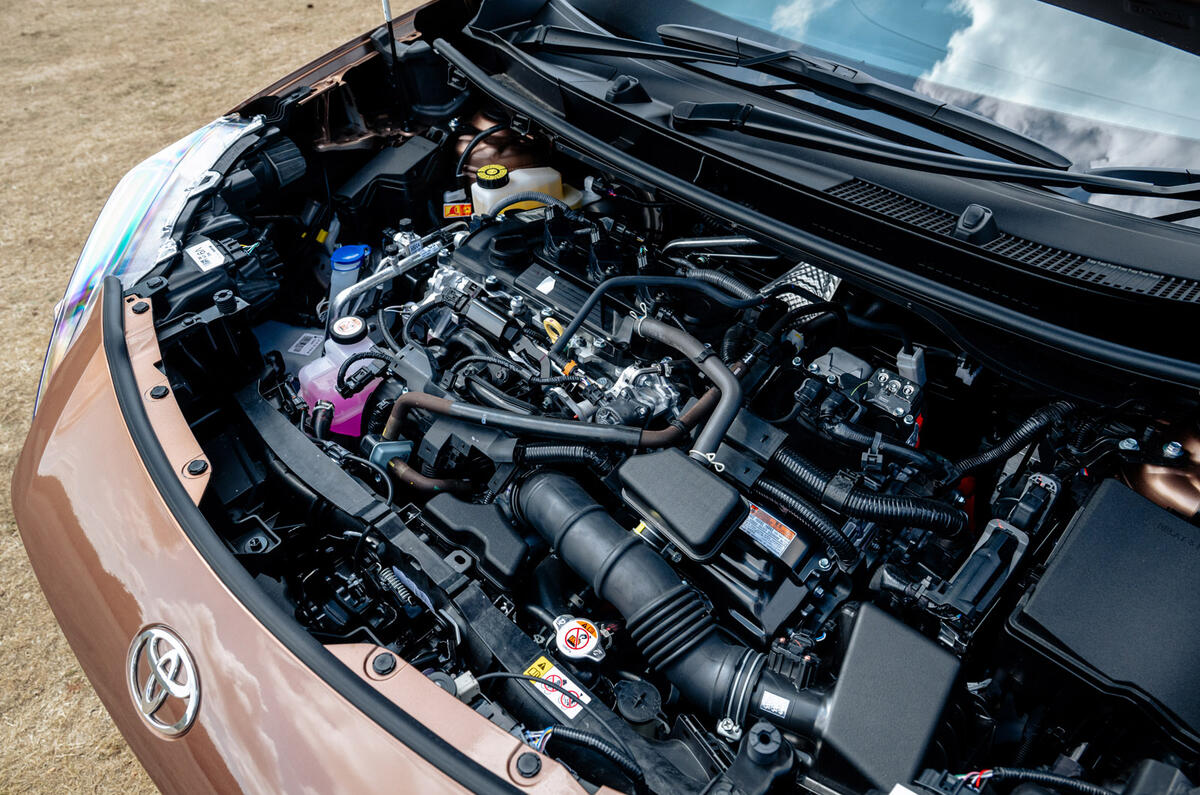
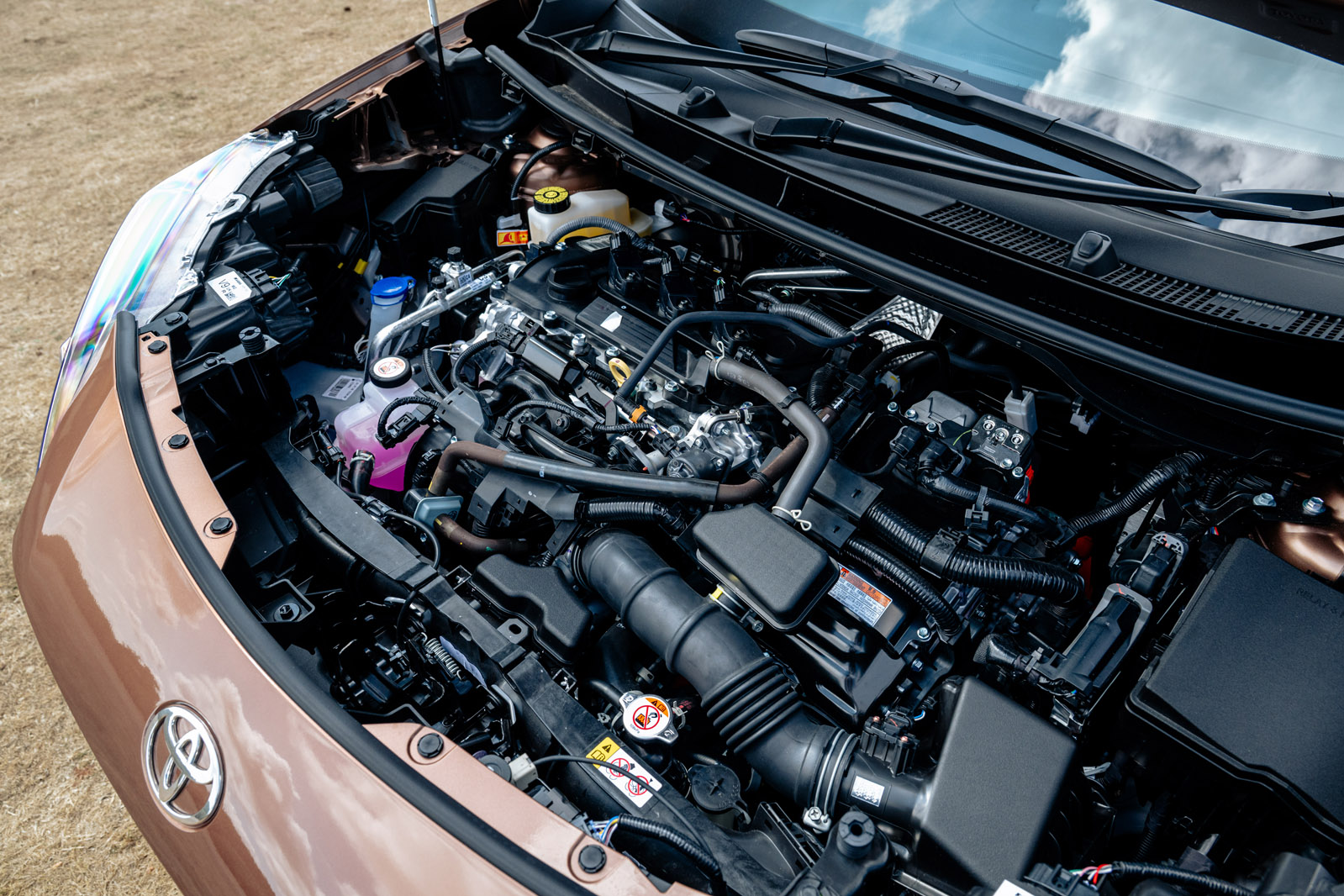
Underneath it’s all very familiar, with the same TGNA-B platform and 1.5-litre petrol hybrid powertrain as before. The three-cylinder engine runs on the clean-burning Atkinson cycle and is teamed with a pair of electric motors to send power through Toyota’s well-known e–CVT transmission. 

The motors are powered by a 178V lithium ion battery, which is tiny but holds enough energy to power the Yaris Cross in pure-EV mode for around a mile. The motors cut in at slower speeds on a light throttle to help boost fuel efficiency. 

Given that this is essentially a Yaris on stilts, it's no surprise to find that the Yaris Cross uses the same suspension set-up, with MacPherson struts at the front and a torsion-beam arrangement at the rear. 

You can still have the Yaris Cross with four-wheel drive. It's similar to other hybrid Toyota and Lexus 4x4s in that it uses an electric motor to drive the rear axle at lower speeds, forgoing the need for a transfer case and propshaft. Sure, it won’t give the Yaris Cross the go-anywhere ability of a Land Rover Defender but for snow and muddy fields it should come in handy. 

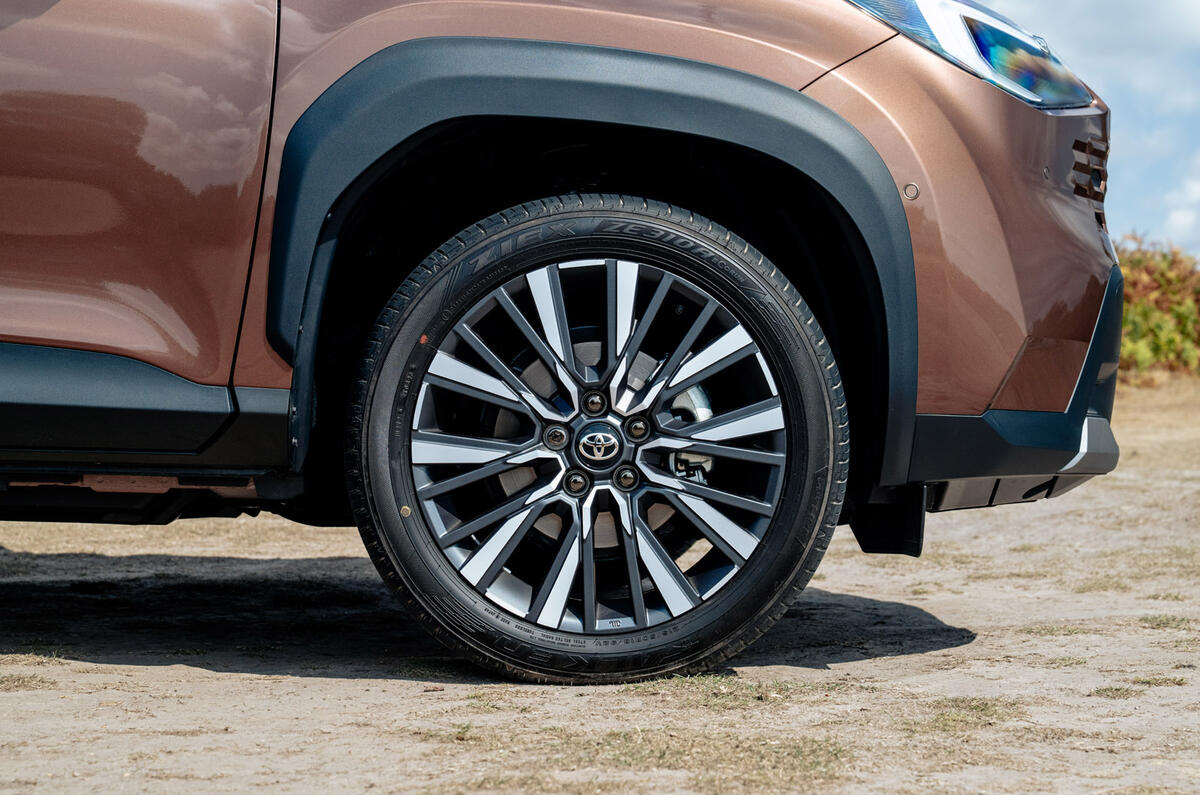
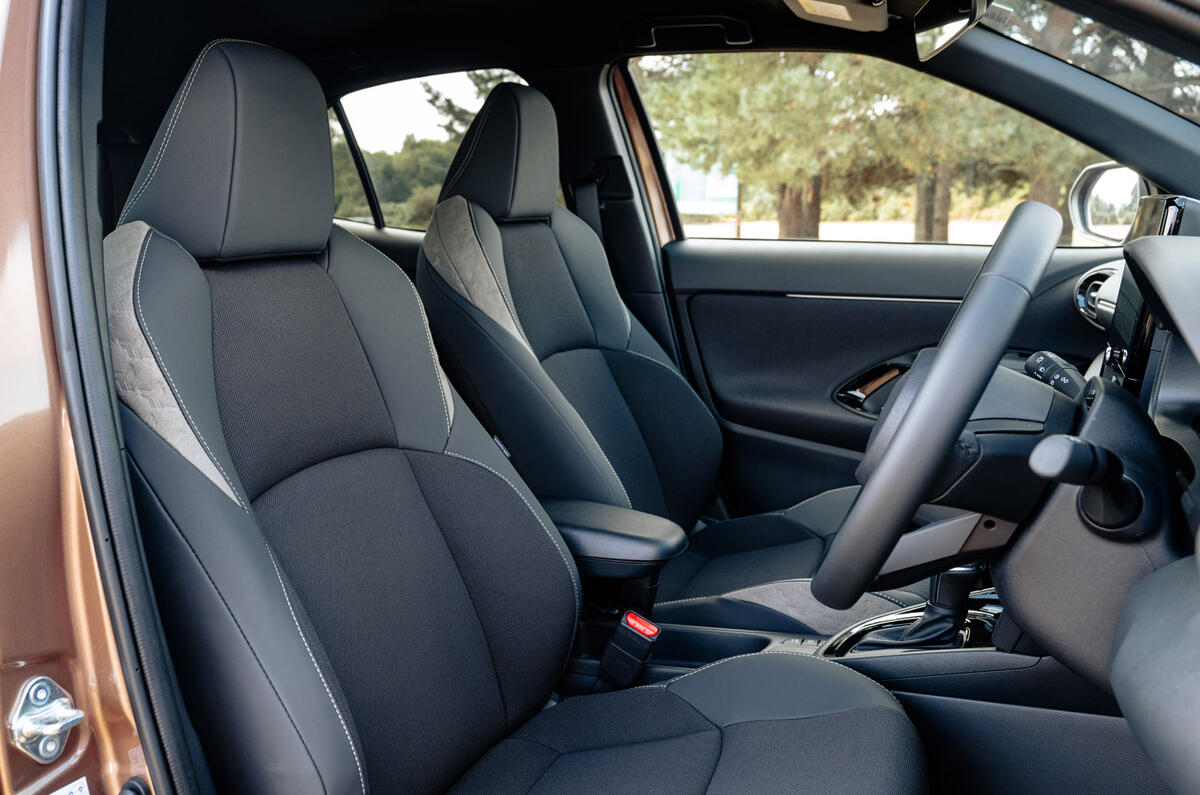
Toyota has enhanced equipment levels across all four trims, which include Icon, Design, Excel and GR Sport. The entry-level Icon has gained auto-folding door mirrors and LED headlights, while the Design gets wireless phone charging, parking sensors, sports-style front seats and redesigned 17in alloy wheels. 

Excel, which is expected to be the trim of choice, has gained restyled 18in wheels and a new leather and recycled material seat upholstery. Range-topping GR Sport gets some additional safety kit and a powered tailgate. Both of the upper trims can be had with an optional panoramic roof. 

INTERIOR

6
Toyota Yaris Cross review 2026 008

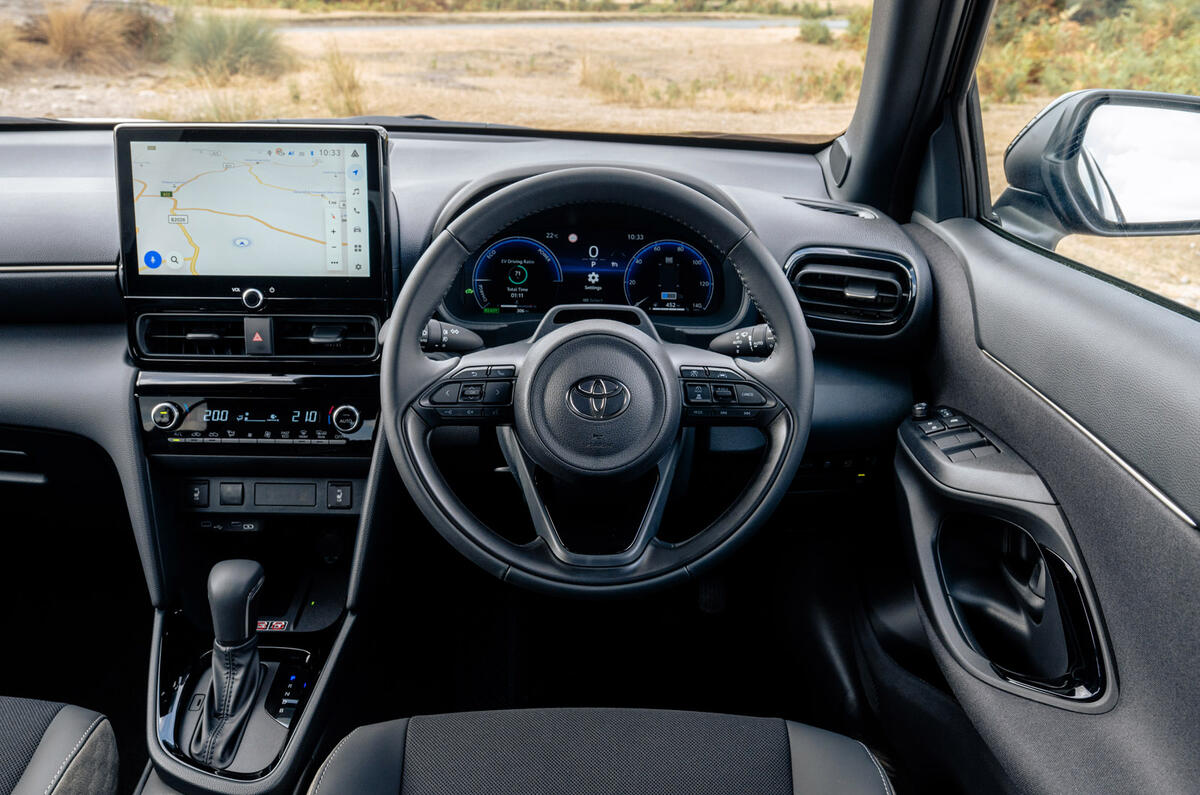
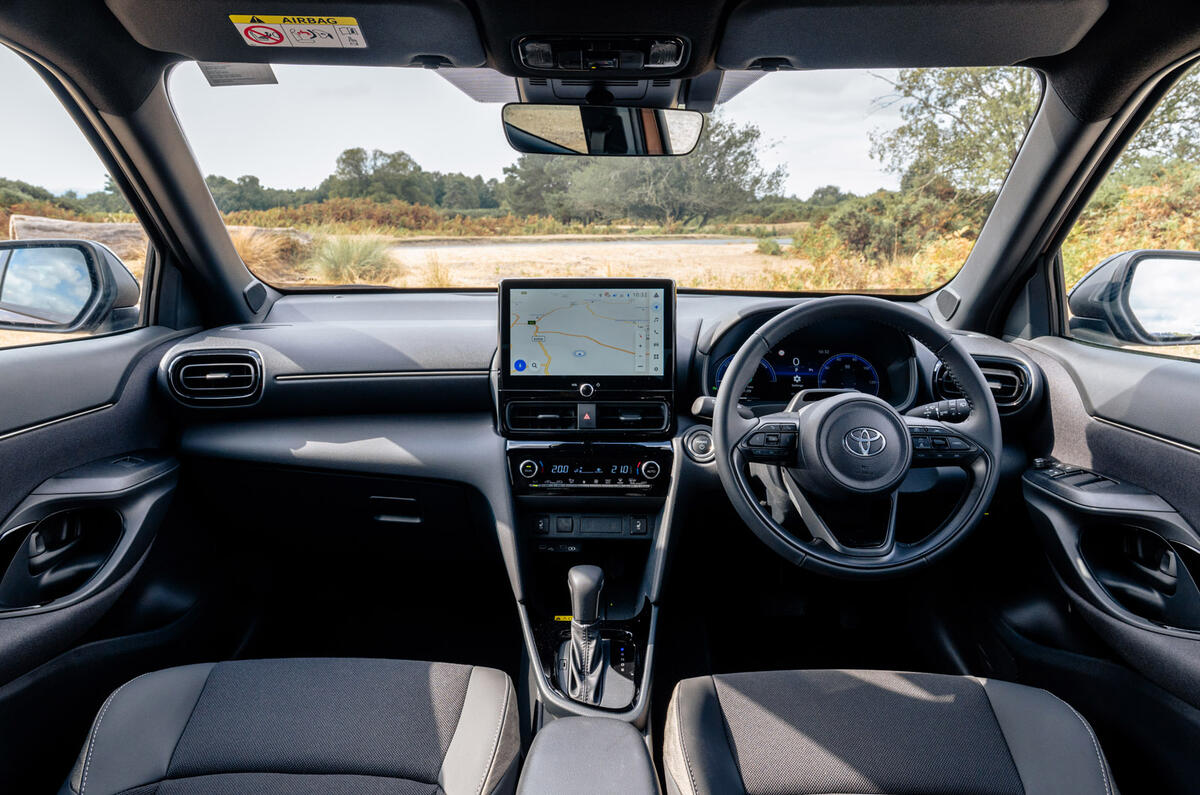
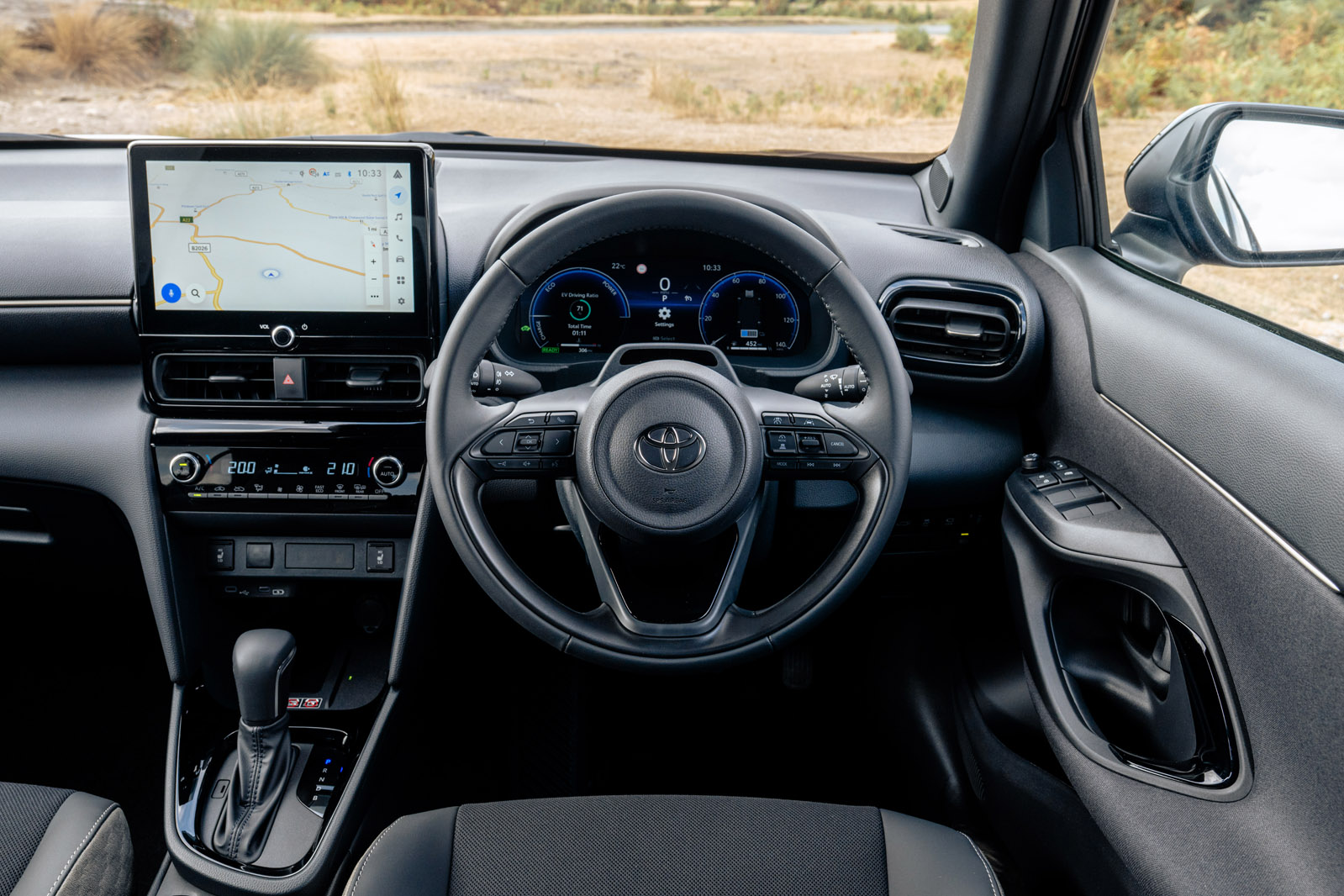
Inside the Yaris Cross opts for function over form – but that’s no bad thing in an era of huge interior touchscreens and software-defined vehicles. 

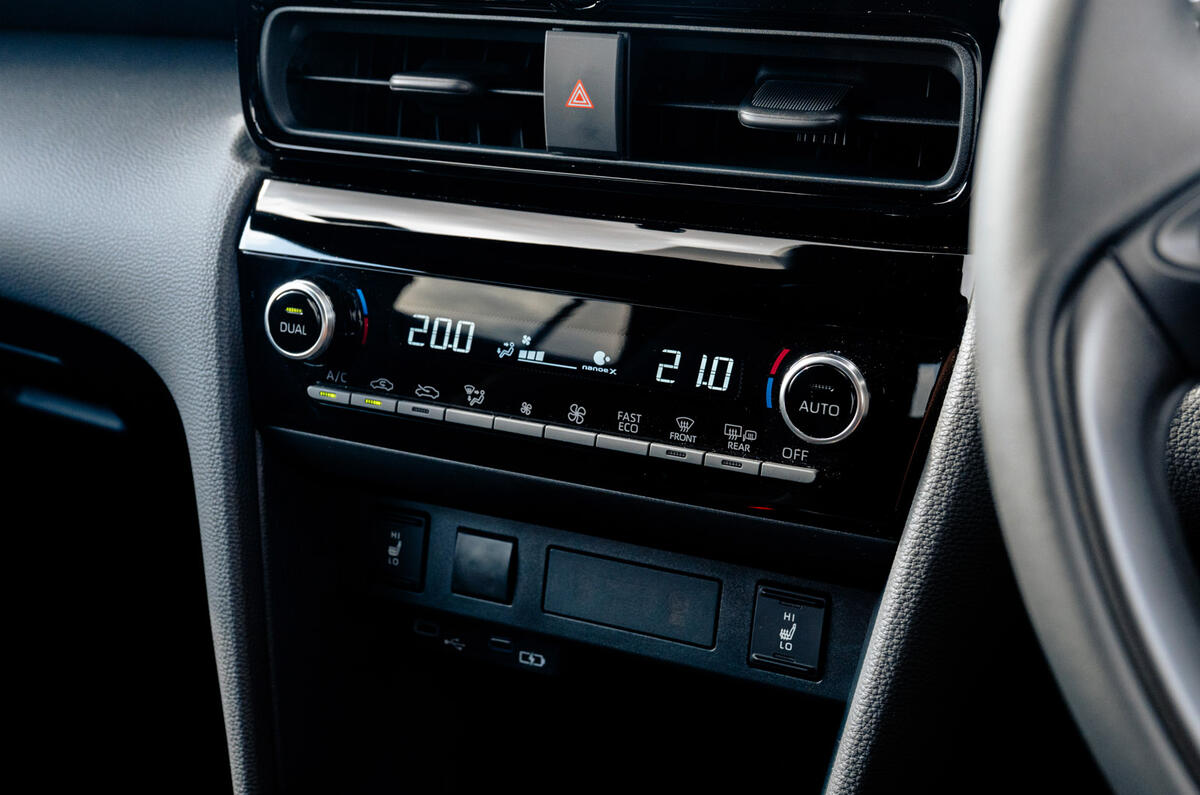
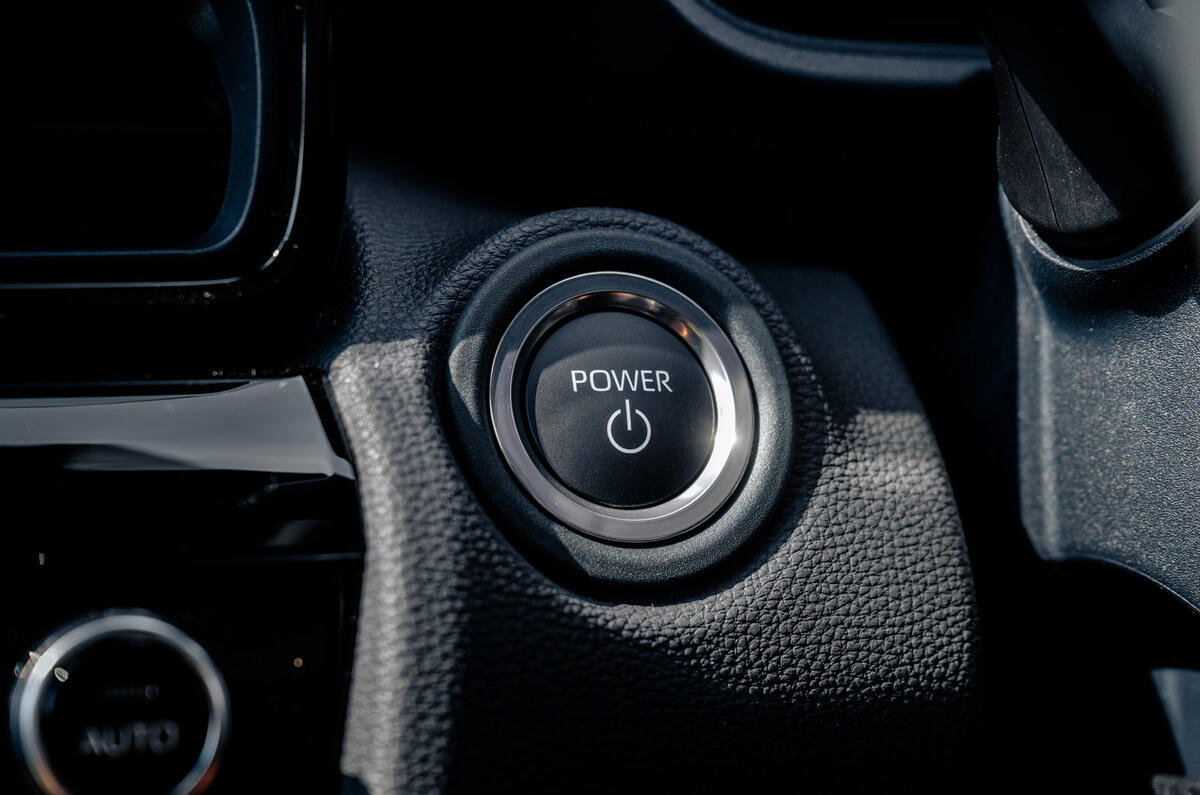
Usability remains one of its key strengths: the Yaris Cross retains a suite of physical switchgear, from rotary climate control dials to buttons for the seat heaters, drive modes and mirror adjustment.

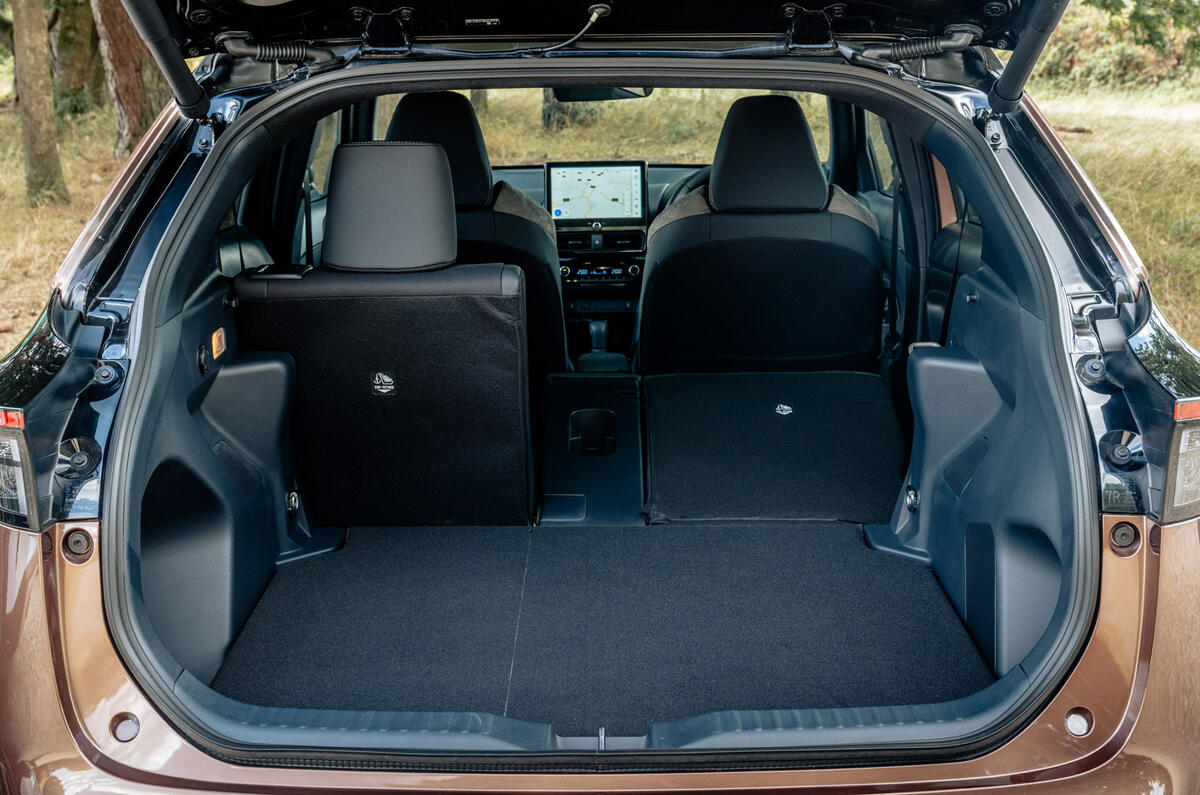
The Yaris Cross has flexible underfloor storage in the boot, but the split-panel floor system feels flimsy and cheap. A single panel would have been a far better choice.

The dashboard does look a little dated by modern car standards, but ease of use and common sense are the overriding takeaways here. 

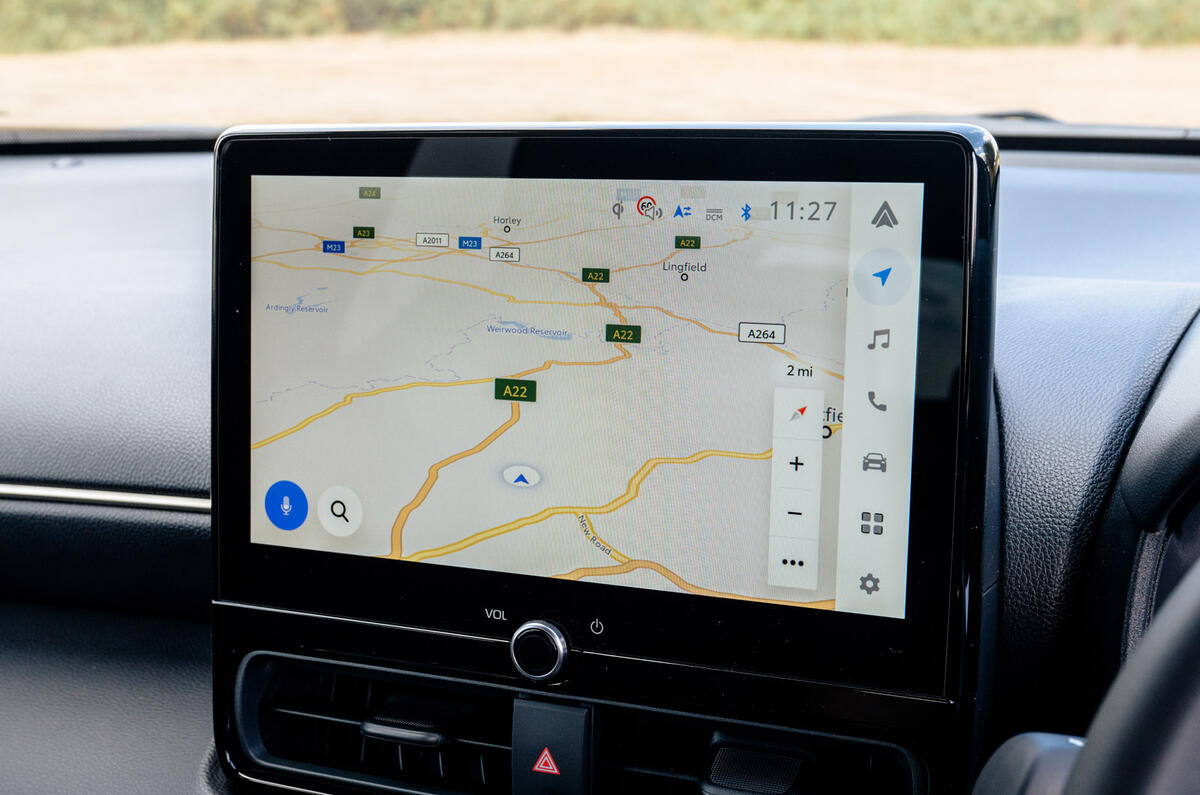
The 10.5in central display is well-configured, responsive and easy to navigate. Pairing your phone wirelessly via Apple CarPlay is a seamless process – and while Toyota’s own built-in navigation system worked well, it's clear the brand expects most owners to run the screen through their smartphone. 

Finding a comfortable seating position is easy, thanks to the decent seat adjustment and a steering wheel that can be changed for both reach and rake.

The Yaris Cross relies on hard, scratchy plastics: most touchpoints feel cheap and lacking material richness, save for a bit of squidgy, rubber-like material on the dash.

That said, there’s a robustness to the interior, which helps make up for a lack of premium feel. 

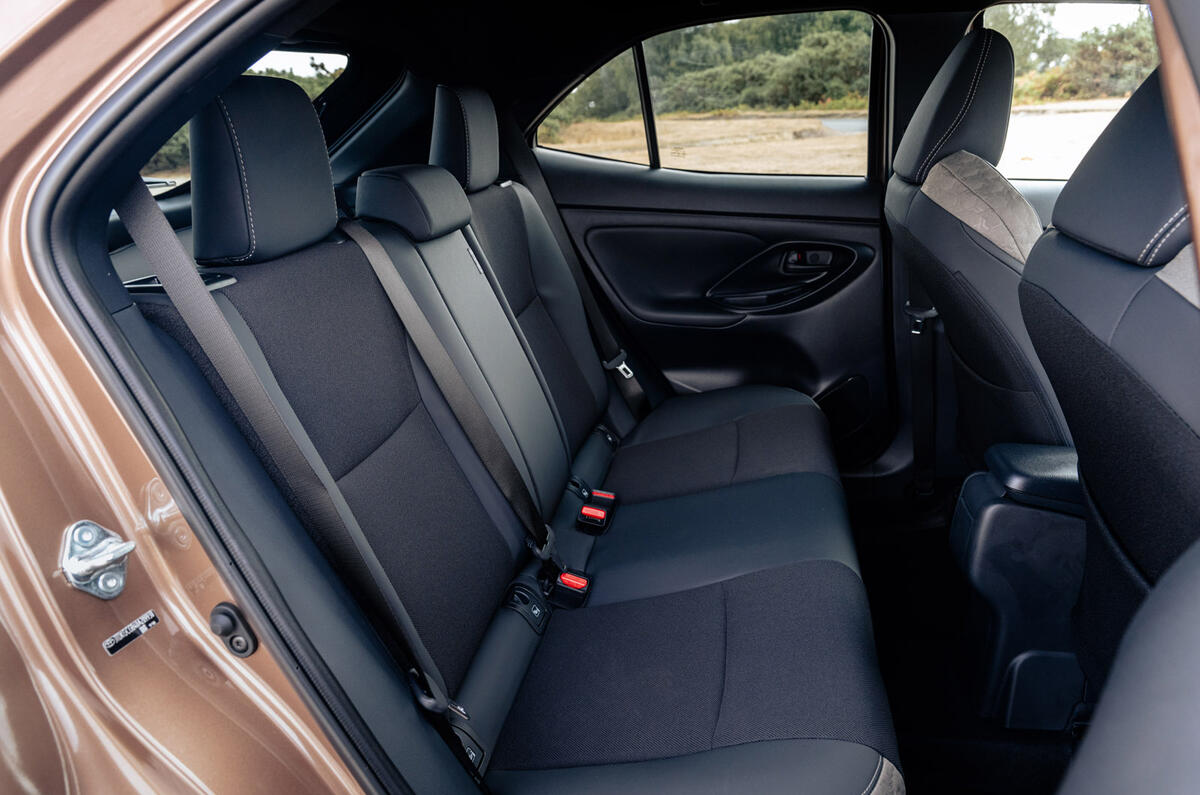
Given that the Yaris Cross is effectively a supermini on stilts, you won’t be surprised to learn that rear accommodation is pretty compromised. Head room is adequate but leg room is virtually non-existent, especially with the driver’s seat set to a 6ft tester's preferred position. It’s certainly better tailored to children rather than adults. 

And at 360 litres, the boot is only average compared with class rivals. 

ENGINES & PERFORMANCE

7
Toyota Yaris Cross review 2026 021

Toyota has been fine-tuning and perfecting its hybrid powertrains for decades now, so naturally the petrol-electric system found in the Yaris Cross feels smooth and linear. 

The transition from engine to motor is imperceptible at slower speeds, although the engine can sound pretty unrefined and gruff under load. It’s not a particularly exciting powertrain either but it works well. 

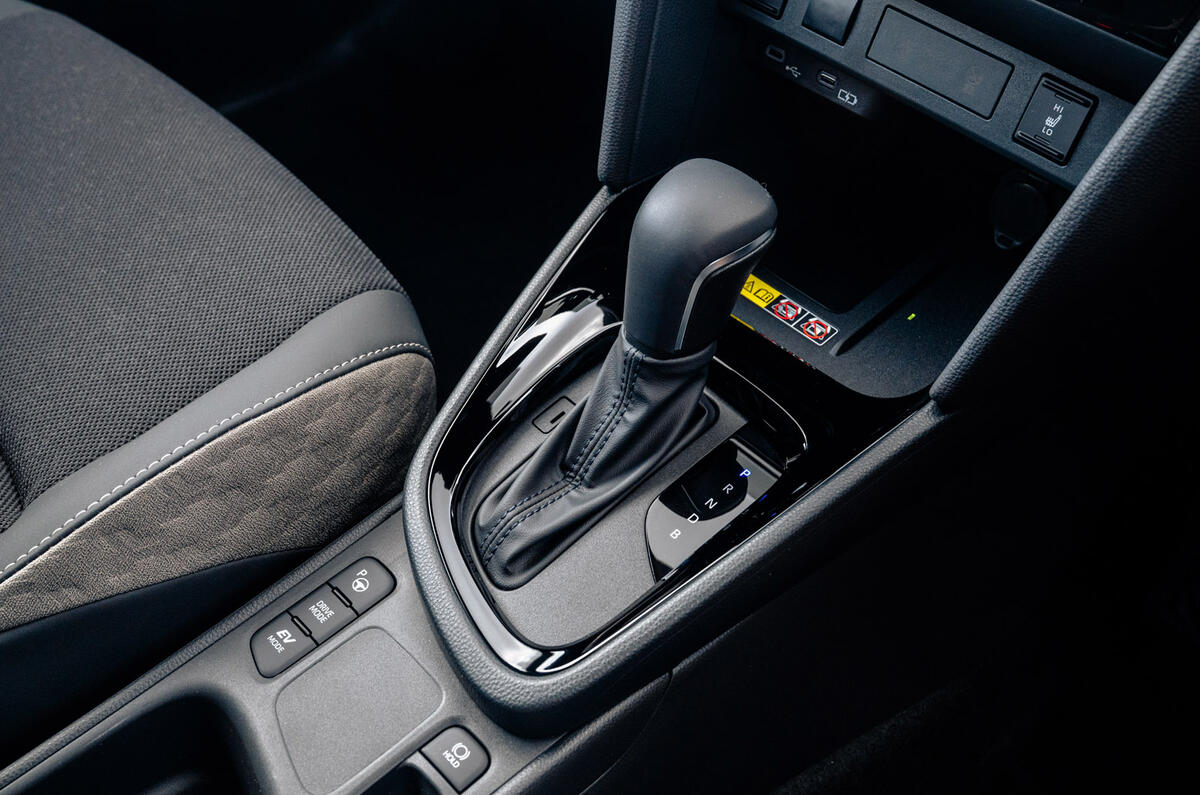
There are no manual ratios; the only other option is the B function, which adds an extra helping of engine braking energy regeneration for the battery.

The driveline is well-calibrated, which means the Yaris doesn’t suffer too much from the rubber-band effect that can tarnish some CVTs. Sure, it gets more vocal when you’re accelerating hard, but most of the time it manages to keep the engine revs low. 

Producing 129bhp and 136lb ft of torque, allowing for a fairly sedate 10.7sec 0-62mph time. It’s not fast by any means but still feels brisk around town and perfectly capable out on the open road. 

In fact, it performs best when driven smoothly. Gentle throttle inputs and an overall more relaxed approach means you can make greater use of the motors for swift and efficient progress. 

The eCVT is smooth and endows the Yaris Cross with a simple, easygoing vibe that makes it ideal for mooching around town or trundling along a cross-country road.

RIDE & HANDLING

Toyota Yaris Cross review 2026 018

On the road, the Yaris Cross plumps for everyday usability over driver engagement. The steering is light, accurate and well-judged, which makes it great for pootling around town or negotiating tight car parks. 

While there isn’t much tactile feedback through the steering wheel, it's easy to point down a twisty B-road, and through corners its body movements are kept in check.

On smooth Tarmac, it’s pliant and perfectly acceptable for daily duties. Noise levels rise on coarse motorway surfaces, but its wind and road roar are generally well-isolated.

There's not enough connection here to inspire confidence in you to press on, and in wet conditions there wasn’t much grip to lean on through corners. 

You can feel its extra mass and height compared with the standard Yaris, but not markedly so. Still, it can’t match the Puma's dynamic appeal. 

The Yaris Cross has a reasonably cushioned and quiet ride. There’s a noticeable amount of jostle and jounce at lower speeds, and the suspension can struggle to isolate the cabin from sharp edges and potholes. It rides over lumps and bumps with more composure, but over consistent road imperfections it starts to feel unsettled. 

Ultimately the Yaris Cross doesn’t really engage or excite, but it remains and accessible and easy-going compact crossover that's ideal for both low-speed urban driving and the occasional motorway jaunt.

MPG & RUNNING COSTS

8
Toyota Yaris Cross review 2026 001

Toyota claims the Hybrid 130 has a WLTP combined fuel economy of between 55.3 and 64.1mpg. While those figures haven’t changed much, they remain impressive today. 

On a mixed test route, which included urban, rural and motorway driving, our Excel test car averaged 57.1mpg, promising a range of well over 450 miles. When tackling the test route with less vigour, it achieved 63mpg.  

The Design and Excel trims are very similar in terms of kit, but I'd still opt for the latter for its heated seats, larger and customisable instrument cluster and electric tailgate.

Prices for the Yaris Cross range from £27,445 to £35,095 for the range-topping GR Sport model. The Excel comes in at £33,695, which makes it slightly dearer than a top-spec Renault Captur E-Tech Full Hybrid (£29,395) or a Ford Puma Ecoboost Hybrid ST-Line X auto (£31,495). 

That said, the Puma is only a mild hybrid, so it can’t match the Yaris Cross for efficiency, and its lack of physical switchgear makes it less user-friendly, particularly on the move. 

VERDICT

7
Toyota Yaris Cross review 2026 022

In what is a competitive market, the Yaris Cross continues to make a strong case for itself. It's not quite as fun and fluid to drive as the Puma, but it's one of the more accomplished offerings in the class.


Toyota’s finely tuned hybrid powertrain continues to deliver on the efficiency front and from a user-friendliness point of view. It does all the heavy lifting for you while yielding excellent economy figures. 

Of course, there are some misgivings. The interior feels rather cheap; rear space is very limited; the engine isn’t the most refined under load; the ride could be more composed; and the ADAS could be easier to turn off.

But then there’s something about the Yaris Cross that gives it enduring appeal in an EV-dominated landscape. There’s no iPad-like screen strapped to the dashboard; all key functions are controlled by a physical button or switch; it's comfortable and quiet enough for everyday use; and it delivers excellent fuel economy. 

For those who want a sensible, fuss-free runaround that’s easy to drive and use, the Yaris Cross is still worth a punt. 

Sam Phillips

Sam Phillips
Title: Senior Staff Writer

Sam joined the Autocar team in summer 2024 and has been a contributor since 2021. He is tasked with writing used reviews and first drives as well as updating top 10s and evergreen content on the Autocar website. 

He previously led sister-title Move Electric, which covers the entire spectrum of electric vehicles, from cars to boats – and even trucks. He is an expert in new car news, used cars, electric cars, microbility, classic cars and motorsport. 

Sam graduated from Nottingham Trent University in 2021 with a BA in Journalism. In his final year he produced an in-depth feature on the automotive industry’s transition to electric cars and interviewed a number of leading experts to assess our readiness for the impending ban on the sale of petrol and diesel cars.